Dethroned
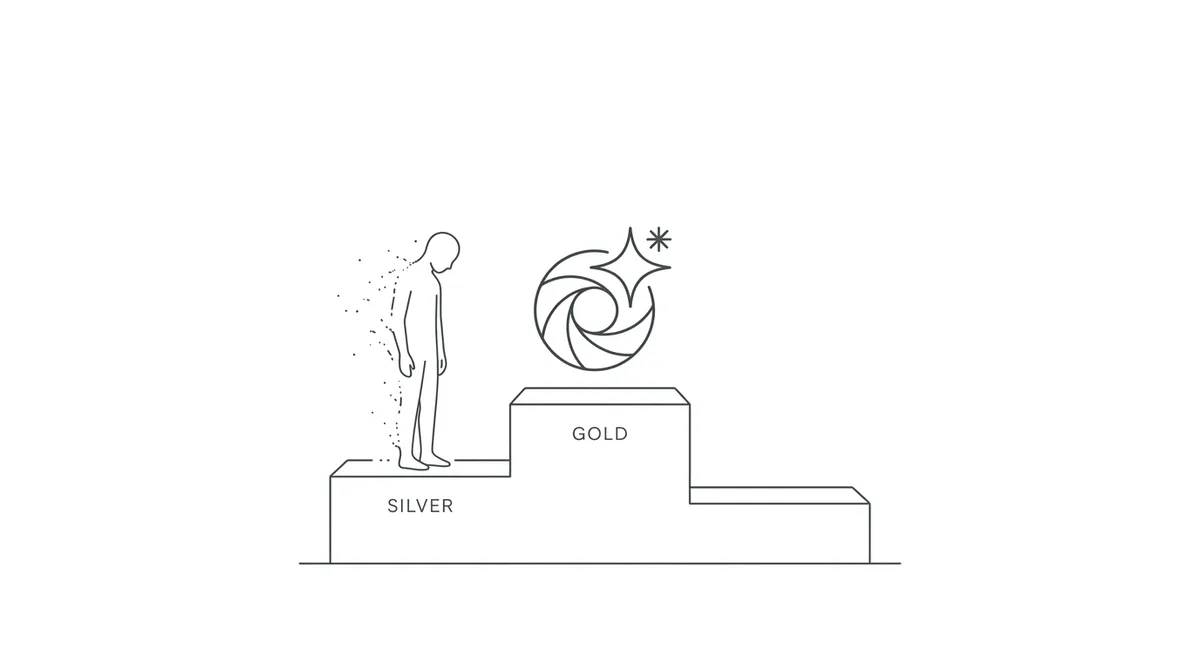
François Chollet was talking about his children.
"Are we just going to outsource our minds? Our thoughts, our cognition, and all our abilities to the machine? What are we going to retain? What's it going to mean to be human, not in ten years, but fifty years from now? My son, my daughter, they're going to live to see the 22nd century. That's something I think about a lot."
That was the ARC-AGI 3 launch, March 2026. The man who pioneered the benchmark for measuring machine intelligence isn't worried about scores. He's worried about identity. Not "AI will take my job." Something older, deeper. The feeling that if machines can think, the thing that made you you might not be yours anymore.
Dethroned.
The Preview
In March 2016, a DeepMind AI called AlphaGo sat across from Lee Sedol, the greatest Go player alive, an 18-time world champion, in a five-game match broadcast to 200 million viewers. Go is a 2,500-year-old game with more possible positions than atoms in the observable universe. Supposed to be the last fortress of human intuition, decades away from falling to AI. AlphaGo took it in four games.
Going in, Lee was the best in the world, and he knew it. "My job is to play Go more beautifully."
Then he lost three games straight. "I kind of felt powerless." He clawed back Game 4 to roaring applause, the only human ever to beat AlphaGo. "I will never exchange this win for anything in the world." Then lost Game 5.
He retired from the game entirely. "AI cannot be defeated."
Eight years later, he named what had broken. "Losing to AI, in a sense, meant my entire world was collapsing."
Not because Go disappeared. Not because the beauty left the game. Because he did. The Go master was a core part of his identity, and the only part he'd built. When the mastery became replicable, there was no one left underneath.
His warning to the rest of us: "It will happen for others. It may not be a happy ending."
The Pattern
This has happened before. Freud had a word for it: Kränkung, a wounding of pride so deep it reshapes how a species sees itself. Three times, science has ripped away something humanity was sure made us special.
The first blow was Copernicus. We believed Earth sat at the center of the universe. It didn't. We were orbiting a star, in an ordinary arm of an ordinary galaxy. The Church panicked. Galileo was jailed. The world felt like it was ending.
The second blow was Darwin. We believed we were separate from animals. Specially created, categorically different. We aren't. We share ancestors with apes, ancestors with fish, ancestors with bacteria. Victorian society recoiled. Disraeli declared himself "on the side of the angels." Huxley fired back: he'd rather descend from an ape than a man who used his intellect to obscure the truth.
That wasn't the end either. The horror faded. The truth settled. We were still us.
The third blow was Freud's own. We believed we were rational agents, masters of our own minds. We aren't. "The ego," Freud wrote, "is not master in its own house."
Three dethronings. Three things we identified with: our cosmic position, our biological separateness, our rational control. All turned out not to be the point. Each time it felt catastrophic. Each time we survived. Each time the real us remained.
The Deal
Lee Sedol's collapse wasn't about Go. Neither were the other three. They were all about a deal. The same deal you made without knowing it.
The deal is simple: you are what you can do. Your skill is your identity. Your effort is your worth. Your talent is what makes you you. School drilled it in. Performance reviews reinforced it. The entire meritocratic system runs on it. Be smart. Work hard. Get good at something. Succeed. That's who you are.
AGI doesn't replace you. It breaks the deal.
Everything you were taught to build your identity on is commodity: your ability to code, to analyze, to write, to diagnose, to strategize, to create. Not someday. Now.
Chollet saw it coming. "What are we going to retain?" he asked. And the mind races to answer. Creativity. Empathy. Consciousness. It copes. Builds frameworks, theories, defenses. It reshapes the story so it still has a role at the center.
The Catch
In every previous dethroning, the intellect could absorb the blow. We could think our way from geocentrism to heliocentrism, from creationism to evolution, from rationalism to the unconscious. The mind was always the tool that rebuilt the worldview after each collapse.
This time, the tool itself has been dethroned. And any answer the mind constructs is still the mind working. Still the old tool. Still the thing that just lost its throne, trying to climb back on.
For the first time in history, the question "what makes us special?" needs an answer that isn't the intellect. And can't come from it either.
So where do we look?
A man is on his hands and knees under a streetlamp, searching for his house key. A neighbor joins him. After a while, the neighbor asks, "Where exactly did you lose it?" The man points into the darkness. "Inside my house." The neighbor stares. "Then why are you looking out here?"
"Because the light is better here."